
A Place to Learn, Belong, and Dream
2021
By Kelly Mehee Shin
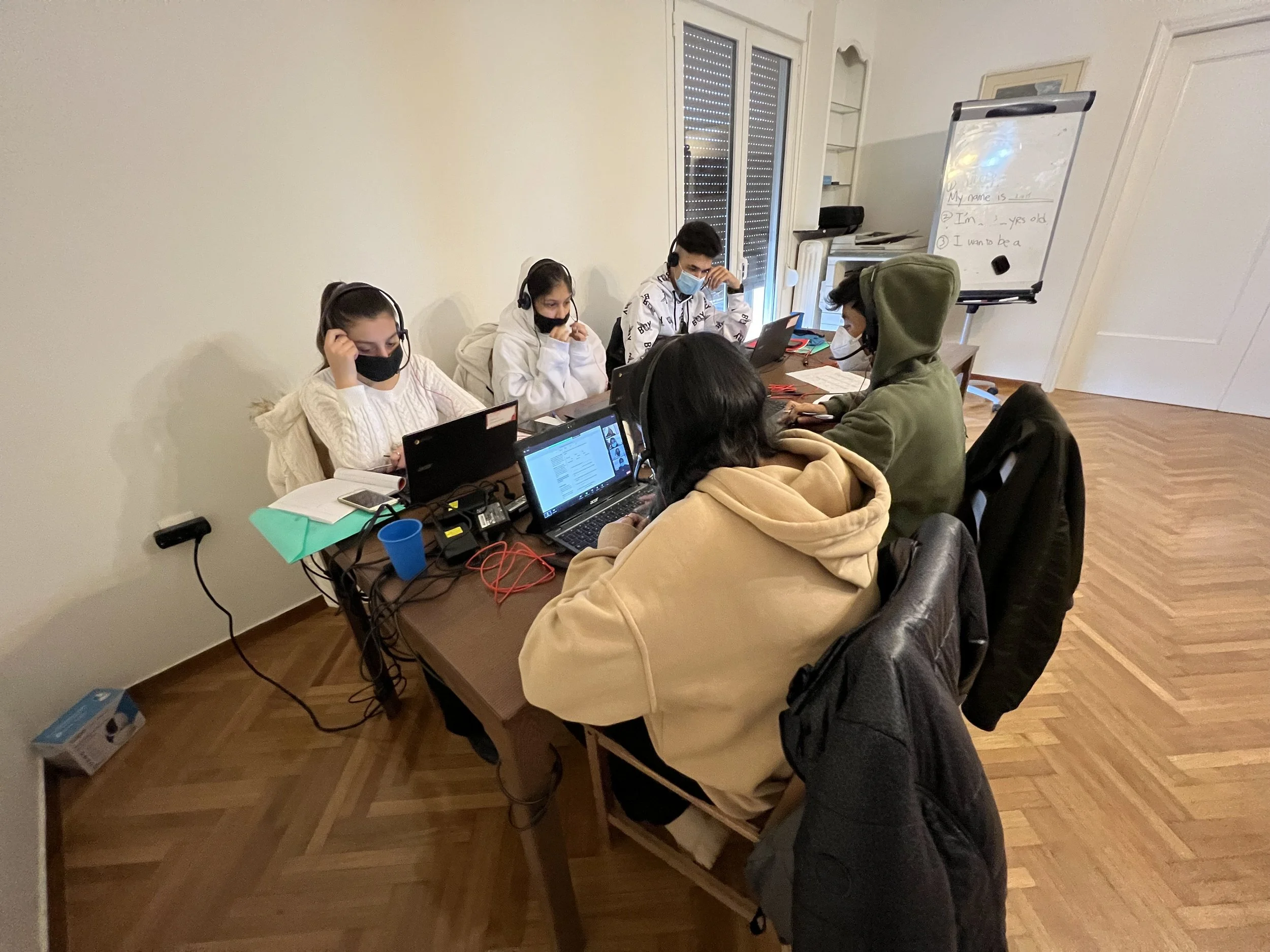
In February 2022, twenty-five refurbished computers donated from Los Angeles were provided to elementary, middle, and high school students at Koinonia Education Center in Athens.
A GROWING NEED AMONG REFUGEE CHILDREN
In 2021, as we spent time with refugee families in Athens, we became
increasingly aware of the educational challenges facing their children.
Elementary, middle, and high school students were adjusting to
a new language and school system while also carrying the effects of
displacement and interrupted education.
The COVID-19 pandemic made these challenges even greater.
Online and technology-based learning required computers, reliable internet,
and digital skills that many refugee families did not have.
Parents deeply desired a better future for their children but often faced
language barriers and unfamiliar school systems that made it difficult
to help them.
In response, Koinonia Education Center began an educational support
program for refugee children and youth. We wanted to provide
a stable place where students could receive help with their studies,
develop computer and language skills, and find encouragement
as they adjusted to life in Greece.
TWENTY-FIVE COMPUTERS, TWENTY-FIVE OPPORTUNITIES
In February 2022, supporters in Los Angeles donated twenty-five
refurbished computers to Koinonia Education Center.
The computers were provided to twenty-five elementary, middle,
and high school students in the program.
Access to a computer opened new possibilities for the students.
They could participate more fully in online learning, complete school
assignments, practice English, and develop digital skills that had
become increasingly important for education and daily life.
The donation was more than a gift of equipment. It was a reminder
that ministry is strengthened through partnership. Resources shared
by one community across the world became practical tools of learning,
confidence, and hope for refugee children and youth in Athens.
REFLECTION
Children do not choose displacement, interrupted schooling,
or the uncertainty of beginning life again in another country.
Yet they carry the consequences of circumstances far beyond
their control.
The twenty-five computers were practical tools, but they also
represented access, dignity, and opportunity. Each computer belonged
to a student with a name, a story, abilities to develop,
and dreams worth encouraging.
We learned that caring for refugee children requires consistency
and patience. A single class or donation cannot remove every obstacle,
but faithful support over time can help a young person regain
confidence and move forward.
Looking back, we are grateful for the supporters, volunteers, students,
and families who made this program possible.
God used shared resources and ordinary acts of care to create a place
where children could learn, belong, and begin dreaming again.